-
Welcome to your new Gnomio site
Now, you are in control!
Moodle is an open-source Learning Management System (LMS) that provides educators with the tools and features to create and manage online courses. It allows educators to organize course materials, create quizzes and assignments, host discussion forums, and track student progress. Moodle is highly flexible and can be customized to meet the specific needs of different institutions and learning environments.
Moodle supports both synchronous and asynchronous learning environments, enabling educators to host live webinars, video conferences, and chat sessions, as well as providing a variety of tools that support self-paced learning, including videos, interactive quizzes, and discussion forums. The platform also integrates with other tools and systems, such as Google Apps and plagiarism detection software, to provide a seamless learning experience.
Moodle is widely used in educational institutions, including universities, K-12 schools, and corporate training programs. It is well-suited to online and blended learning environments and distance education programs. Additionally, Moodle's accessibility features make it a popular choice for learners with disabilities, ensuring that courses are inclusive and accessible to all learners.
The Moodle community is an active group of users, developers, and educators who contribute to the platform's development and improvement. The community provides support, resources, and documentation for users, as well as a forum for sharing ideas and best practices. Moodle releases regular updates and improvements, ensuring that the platform remains up-to-date with the latest technologies and best practices.
Links of interest:
(You can edit or remove this text)
Available courses

Filing is the systematic process of organizing and storing office records so they can be located quickly and easily when needed. Think of it as the "memory" of an organization; if information is the lifeblood of an office, then a good filing system is the circulatory system that ensures it gets where it needs to go without getting lost.
- Teacher: Felister Gaicugi
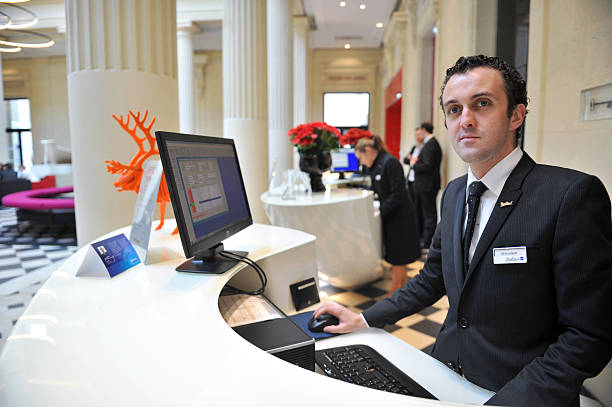
Managing front office operations is the art and science of overseeing the "face" of an organization. It is the primary touchpoint where the public interacts with a business, making it the most critical factor in shaping first impressions and building lasting professional relationships.
Efficient front office management ensures that the first point of contact—whether a physical reception desk or a digital portal—is professional, organized, and helpful.
- Teacher: Felister Gaicugi

Managing office mail is the systematic process of receiving, sorting, recording, and distributing correspondence to ensure that communication flows smoothly within an organization. Whether physical or digital, effective mail management prevents information bottlenecks and ensures that urgent matters are addressed promptly.
A well-organized mail system acts as the "central nervous system" of an office—if it’s clogged, the whole body slows down.
- Teacher: Felister Gaicugi

Official meetings coordination is the systematic process of planning, organizing, and managing professional gatherings to ensure they achieve specific organizational objectives. Effective coordination transforms a simple "talk" into a productive tool for decision-making and problem-solving.
The process is generally divided into three critical phases: Pre-meeting preparation, During-meeting facilitation, and Post-meeting follow-up.
- Teacher: Felister Gaicugi